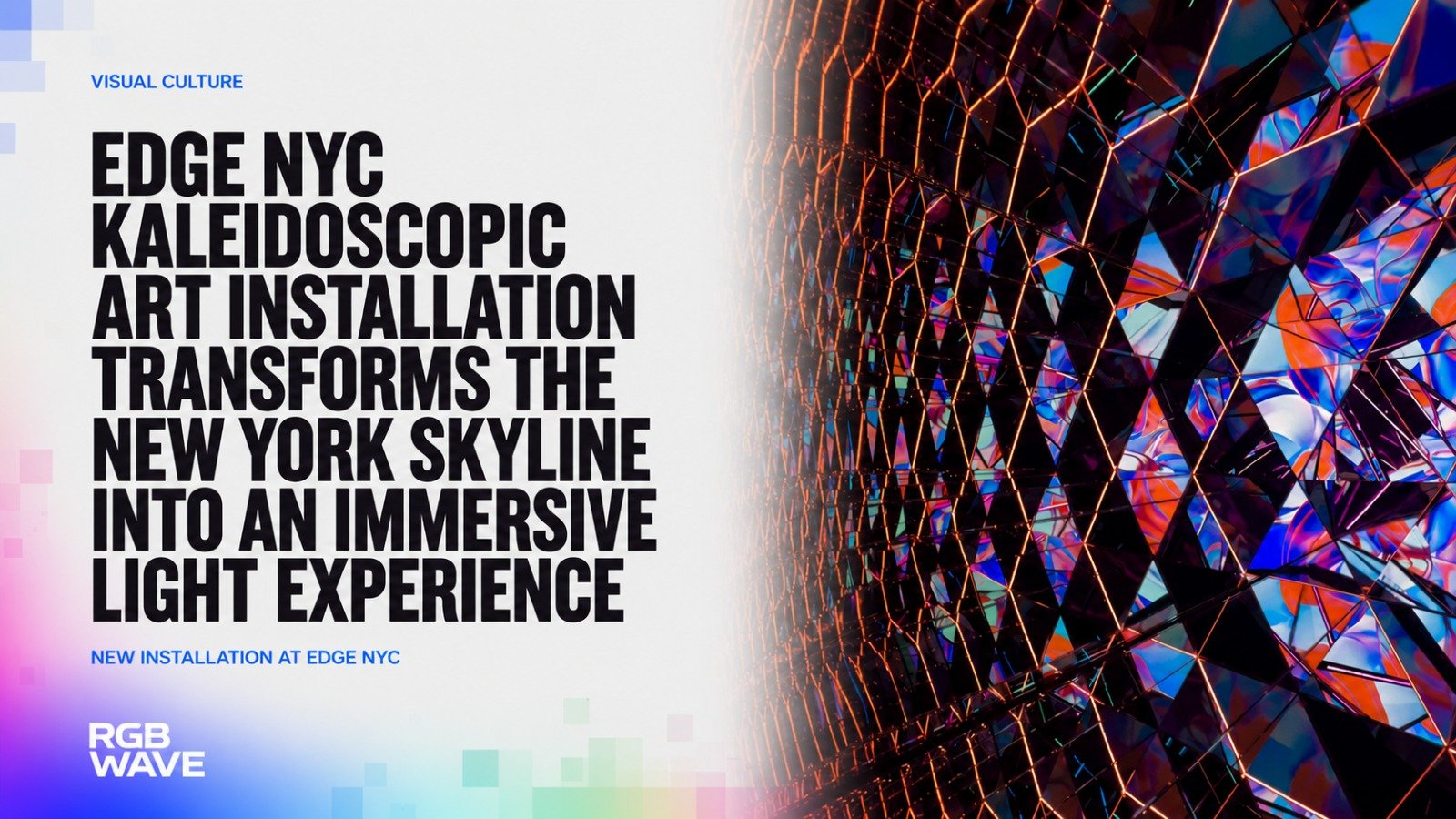
The new kaleidoscopic art installation at Edge NYC merges architecture, light, technology and interaction into a large-scale visual environment above Manhattan.
Opening to the public on June 11 at Edge NYC, the new kaleidoscopic art installation developed through a collaboration between Moment Factory, SOFTlab and Journey invites visitors into a sequence of immersive environments suspended above the New York City skyline. Located within Hudson Yards, the project expands the observatory experience beyond panoramic views, transforming the site into a dynamic landscape of color, reflection, sound and participation.
As immersive environments continue to shape contemporary visual culture, projects like this reflect a broader shift in how audiences engage with public spaces. Rather than functioning solely as destinations for observation, cultural attractions are increasingly becoming interactive systems where visitors generate part of the experience themselves. The installation at Edge NYC sits directly within this evolution, combining digital technologies, responsive design and architectural spectacle.
Architecture as a responsive visual system
The experience unfolds across seven interconnected environments, each designed around a distinct relationship between perception, movement and space. Visitors begin with PRISM, an evolving visual gateway that reinterprets familiar imagery of New York through changing colors and patterns. From there, the journey progresses into spaces that continuously adapt to audience presence.
One of the most striking examples is PULSE, an installation composed of 450 illuminated orbs that react to movement, creating shifting visual compositions generated through interaction. Rather than presenting a static artwork, the space behaves more like a living interface, emphasizing participation as a central component of the aesthetic experience.
The rise of immersive environments in contemporary culture
The project arrives during a period when immersive art has become one of the dominant formats across museums, entertainment venues and cultural institutions worldwide. Yet unlike many digital installations that rely primarily on screens, the Edge NYC experience combines physical architecture, reflective materials, lighting systems and environmental storytelling.
REFLECTIONS exemplifies this approach through a two-level installation featuring 200 mirrored panels that rotate and respond to visitor movement. The resulting visual field constantly changes, producing an environment that feels simultaneously architectural and performative. Visitors are not simply observers but active participants whose presence influences the work itself.
This emphasis on interaction continues throughout KALEIDOSCOPE, where multiple zones of shifting light, mirrored imagery and original sound compositions create an ever-changing environment. The installation reportedly includes New York City’s largest kaleidoscope, reinforcing the project’s interest in transforming familiar visual experiences into something unstable, fragmented and continuously renewed.
Light, reflection and the aesthetics of the digital age
Many of the installation’s visual strategies resonate strongly with contemporary internet aesthetics. Reflection, repetition, immersive color gradients and responsive environments have become defining characteristics of digital visual culture, appearing across social platforms, virtual worlds and experimental design practices.
CRYSTAL CAVE extends these ideas into a large-scale physical environment through oversized crystalline structures that interact with changing daylight and nighttime illumination. Similarly, INFINITE CITY translates New York’s iconic skyline into a responsive field of illuminated columns whose surfaces reflect both visitors and the surrounding urban landscape.
These environments blur distinctions between physical and digital experience. Their visual language feels informed as much by contemporary image culture as by traditional architectural design, demonstrating how digital aesthetics increasingly influence the construction of real-world spaces.
A new way of experiencing the city
What makes the kaleidoscopic art installation at Edge NYC particularly relevant is its ability to transform one of New York’s most recognizable viewpoints into an evolving visual ecosystem. The project reflects larger cultural trends where experience, participation and image creation have become deeply interconnected. Visitors move through environments designed not only to be seen but also to be documented, shared and reinterpreted across digital platforms.
As immersive installations continue to reshape how audiences encounter art, architecture and technology, projects like this highlight the growing convergence of cultural experience and visual media. For readers interested in other stories about the visual trends shaping culture today, the Edge NYC project offers a compelling example of how contemporary spaces are increasingly designed as living systems of light, interaction and image circulation.