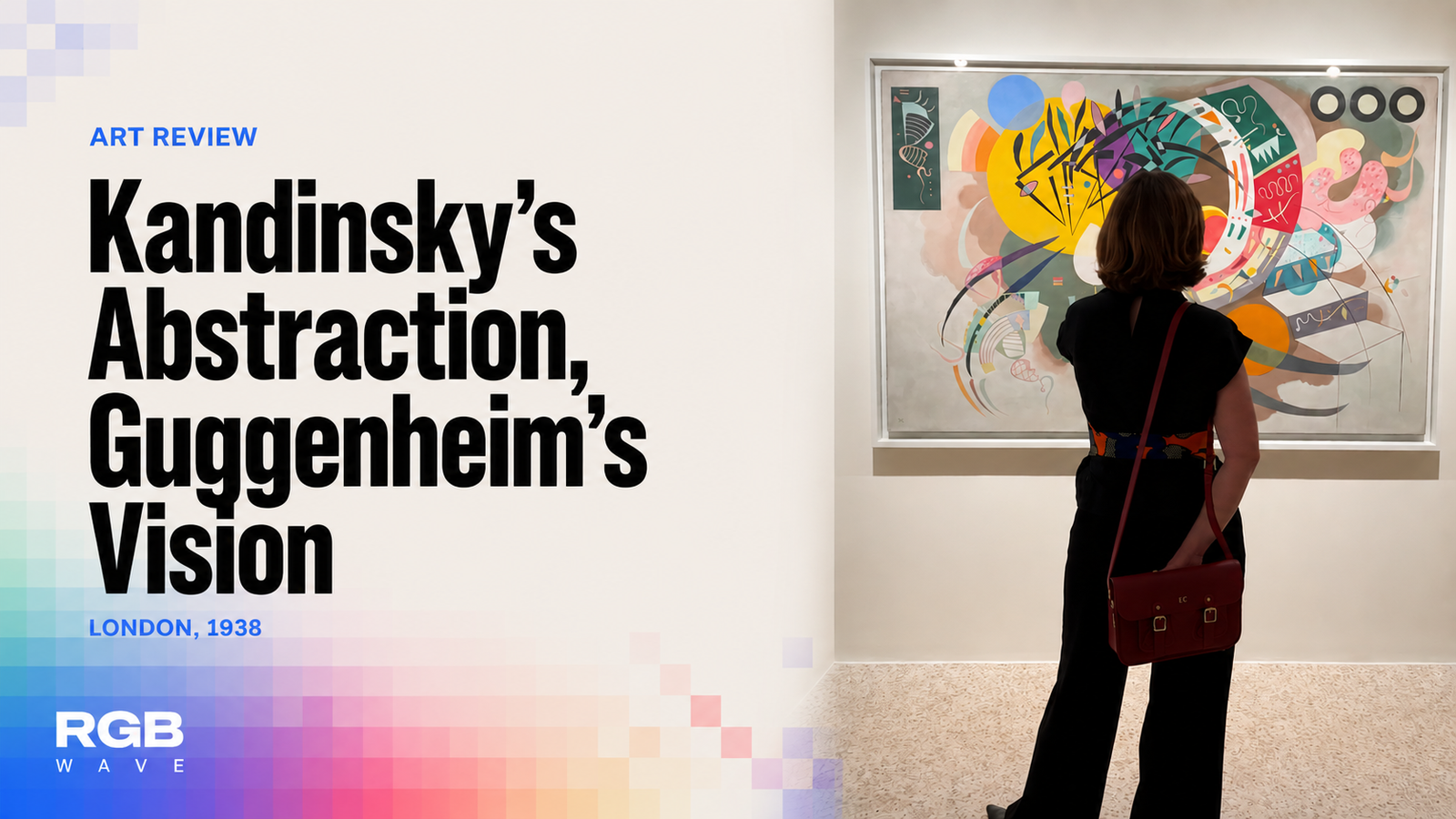
A historic presentation revisits Vasily Kandinsky’s abstract art through the works shown in Peggy Guggenheim’s landmark London exhibition of 1938.
The history of abstract art is filled with pivotal moments, and one of the most significant took place in London in 1938. Organized by Peggy Guggenheim at Guggenheim Jeune, the first major British retrospective dedicated to Vasily Kandinsky introduced audiences to an artist who had already transformed the language of modern painting. A room bringing together works from that historic exhibition offers a renewed opportunity to explore the visual ideas that helped define twentieth-century abstraction.
More than a historical reconstruction, the presentation highlights how Kandinsky’s work continues to resonate within contemporary visual culture. At a time when images circulate faster than ever across digital platforms, his exploration of color, rhythm and form remains surprisingly current. The exhibition invites viewers to reconsider how abstraction functions not only as an artistic language but also as a way of organizing perception itself.
Abstract art as a visual language
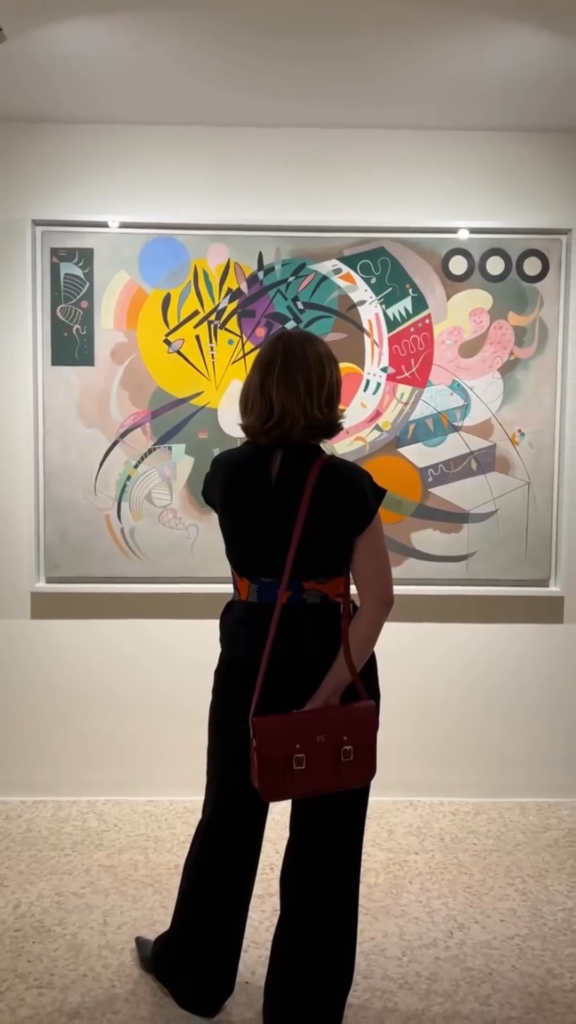
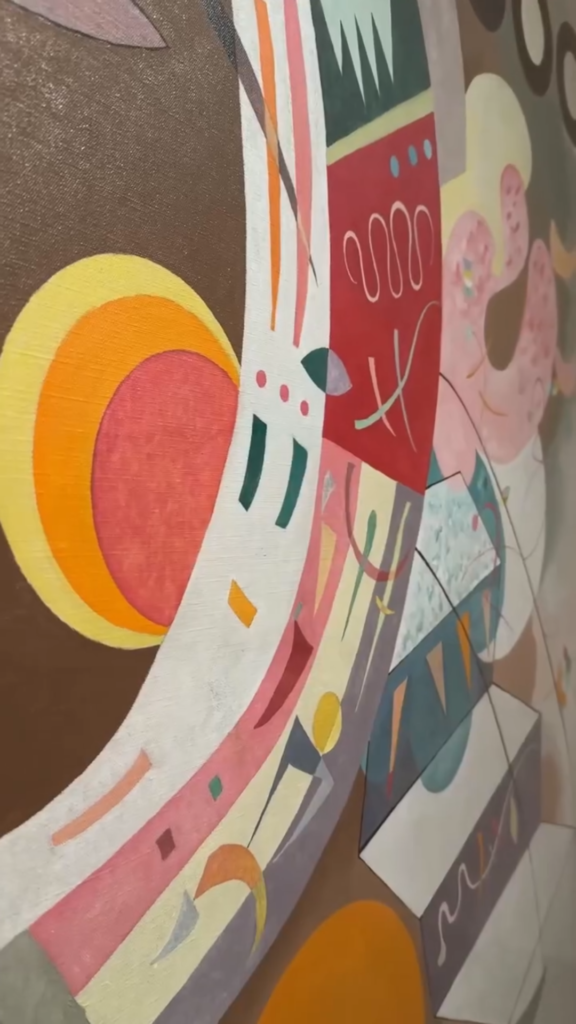
By the late 1930s, Kandinsky had spent more than two decades developing a visual vocabulary that moved beyond representation. Rather than depicting the visible world, his paintings constructed dynamic relationships between shapes, lines and colors. Floating forms, rhythmic compositions and carefully balanced tensions became central elements of his practice.
These works demonstrate how abstraction can communicate emotion, movement and structure without relying on recognizable imagery. In many ways, Kandinsky anticipated visual systems that are now common in digital culture, where symbols, interfaces and abstract graphics shape everyday experience.
This dialogue between visual art, technology and sensory translation also connects with recent experiments that expand how artworks can be perceived beyond the image itself. One relevant example is Google’s tool that lets users hear what a Kandinsky might sound like, a project that turns painting into an auditory experience and opens new questions about how digital systems interpret modern art.
Exile, modernity and artistic transformation
The period represented in the exhibition was marked by profound political upheaval. Following the closure of the Bauhaus by the Nazi regime, Kandinsky relocated to Paris, entering a new phase of artistic experimentation. This context of displacement influenced the evolution of his visual language, leading to increasingly fluid forms and organic compositions.
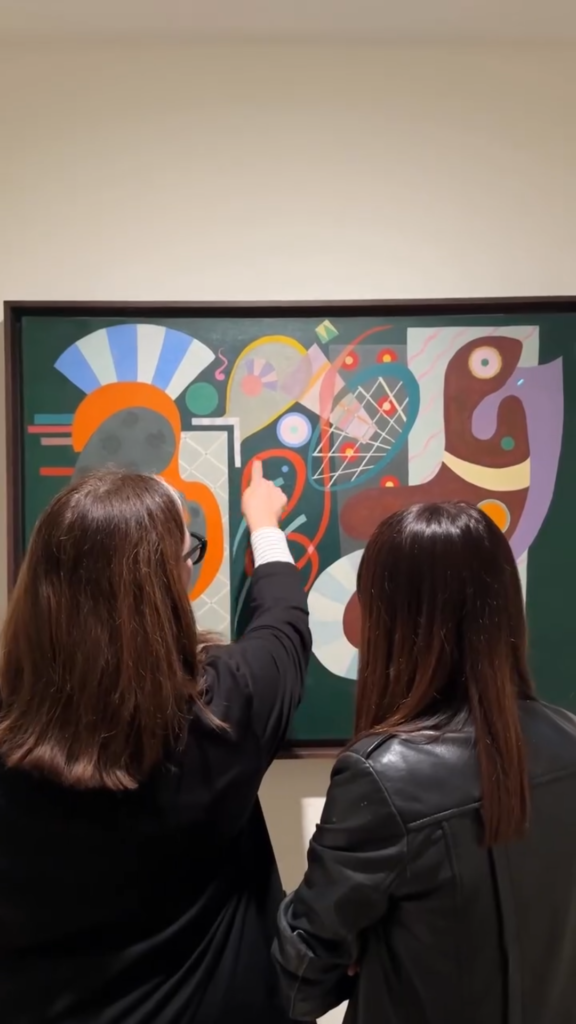

Seen today, these works reveal how artistic innovation often emerges during moments of instability and change. The intersection of personal history, political pressure and creative exploration gives the paintings an enduring relevance that extends beyond their original historical context.
Peggy Guggenheim’s role in shaping modern art
The 1938 retrospective also underscores the importance of Peggy Guggenheim as a cultural catalyst. Through her London gallery, Guggenheim Jeune, she introduced British audiences to many of the most influential figures of modern art. Her support helped establish networks that would later shape the international art world.
The exhibition serves as a reminder that the circulation of artistic ideas depends not only on artists but also on the institutions, collectors and cultural platforms that connect works to new audiences. This dynamic remains central to contemporary art ecosystems and digital forms of cultural distribution alike.
Why Kandinsky still matters today
Contemporary viewers encounter abstraction daily through screens, interfaces, branding systems and algorithmically generated imagery. Kandinsky’s paintings reveal an early understanding of how visual structures can shape perception and emotional response. His work continues to provide a framework for thinking about images in an increasingly mediated world.
As interest in visual culture expands beyond traditional art audiences, exhibitions like this one demonstrate how historical abstraction remains deeply connected to contemporary aesthetics. Readers interested in exploring related perspectives can discover more articles on art, technology and digital aesthetics.
For additional context on Kandinsky’s life and work, visitors can explore the official resources of Peggy Guggenheim Collection and the Bauhaus Dessau Foundation, both of which provide valuable insight into the artistic and historical environment surrounding this period.