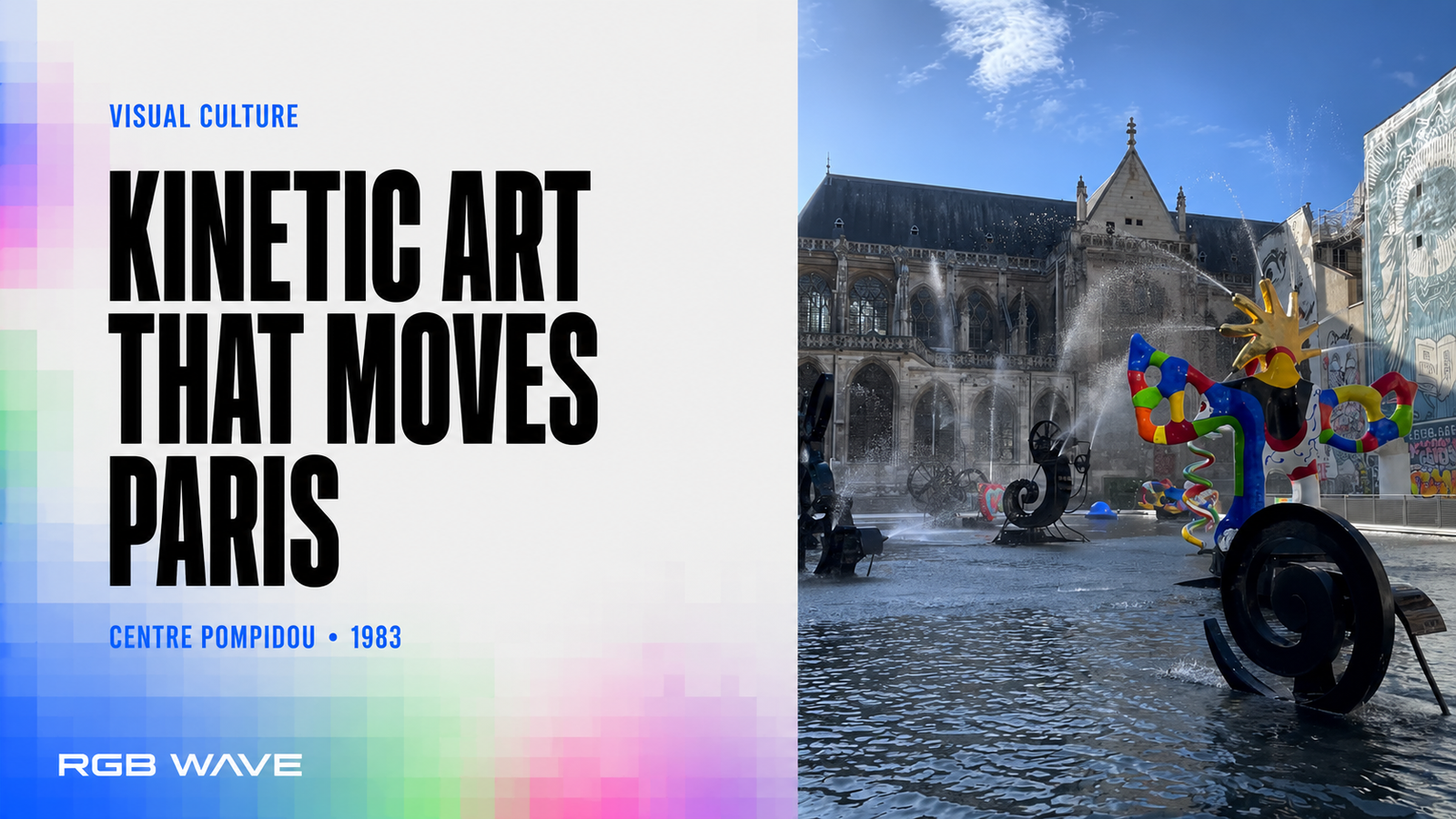
The Stravinsky Fountain remains one of Paris’ most iconic examples of kinetic public art, blending sculpture, water and movement into a constantly evolving visual experience.
Just steps away from the Centre Pompidou in Paris, the Stravinsky Fountain has become one of the city’s most recognizable public artworks. Conceived through a collaboration between Swiss artist Jean Tinguely and Franco-American artist Niki de Saint Phalle, the fountain was inaugurated in 1983 after an initiative proposed by composer Pierre Boulez, then director of Ircam. Its sixteen animated sculptures transform an urban plaza into a constantly moving landscape where art, engineering and play coexist.
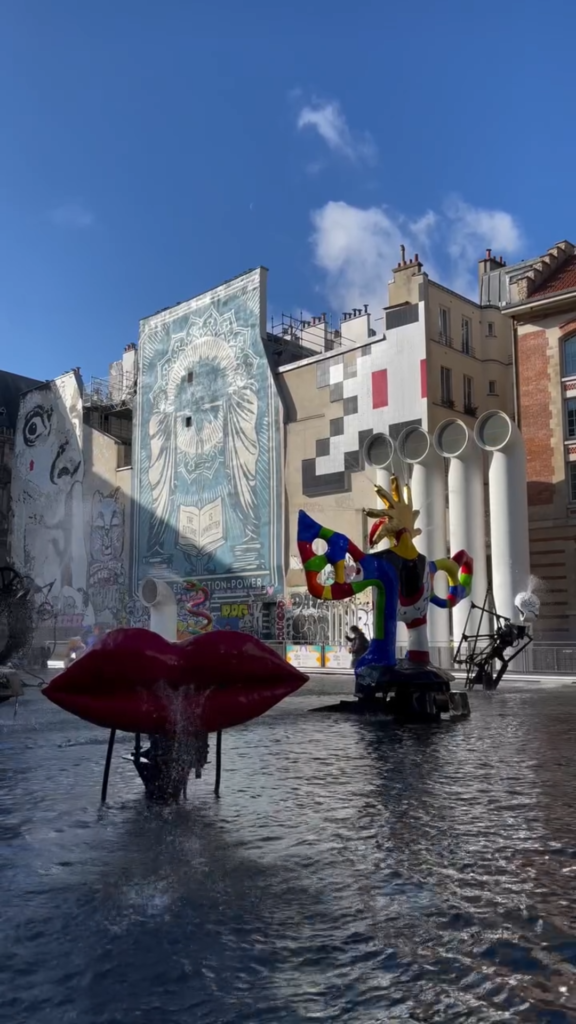
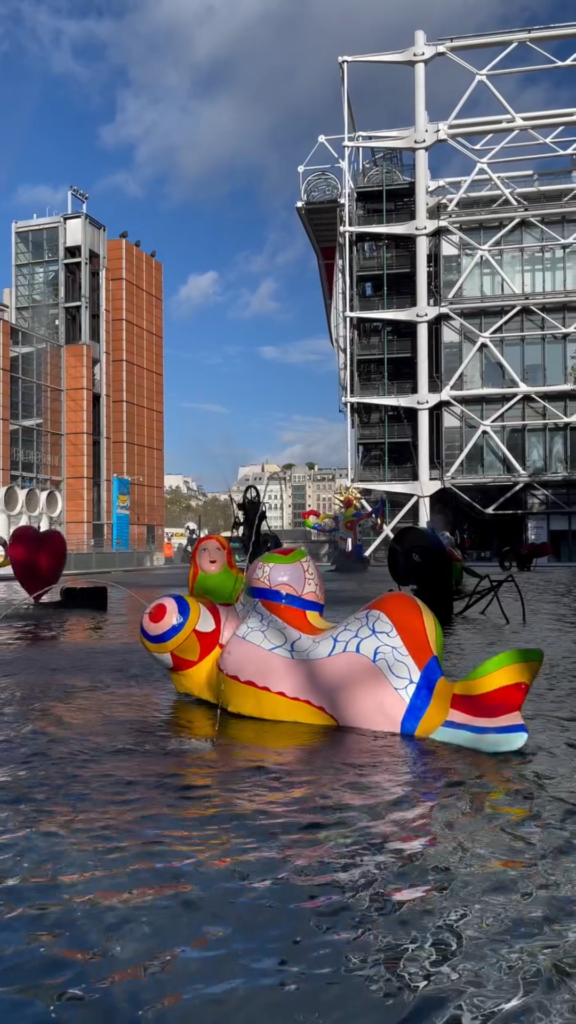
More than four decades after its unveiling, the Stravinsky Fountain continues to demonstrate how public art can reshape the identity of a city. Rather than functioning as a monument to observe from a distance, it invites movement, interaction and repeated encounters. Its combination of mechanics, flowing water and bold visual language anticipates many of today’s conversations around immersive environments, kinetic installations and the circulation of images within contemporary visual culture.
When sculpture becomes performance
Jean Tinguely had long explored movement through self-operating mechanical sculptures, while Niki de Saint Phalle became internationally known for her vibrant, colorful forms. Their collaboration produced a work that feels simultaneously engineered and playful. Each sculpture references themes connected to composer Igor Stravinsky, creating a visual rhythm that unfolds through motion rather than static form.
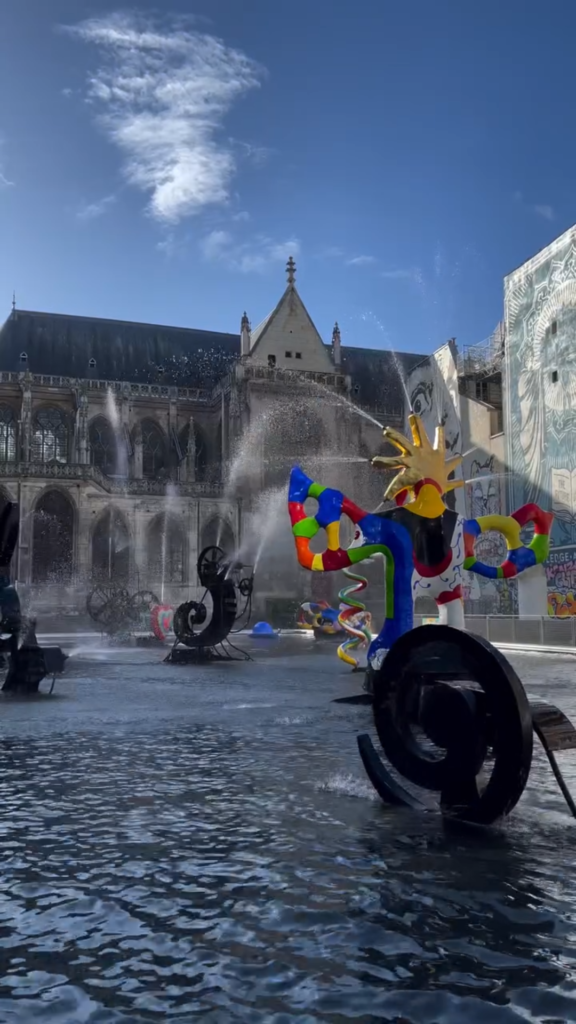
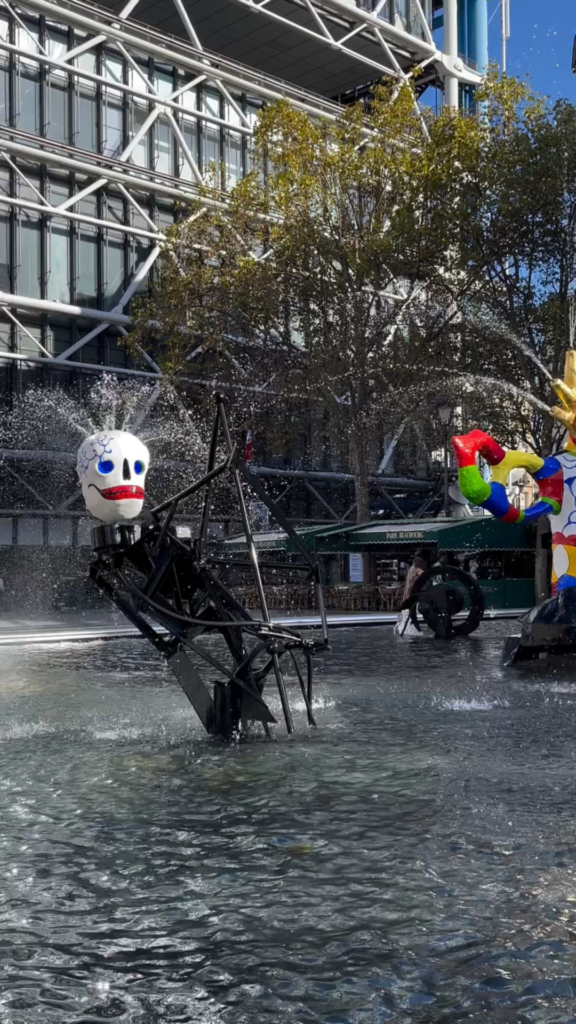
Water functions as both material and choreography. Jets, reflections and mechanical movements ensure that the fountain is never experienced in exactly the same way twice, making it one of the most dynamic examples of public sculpture in Paris.
A landmark for contemporary visual culture
The fountain occupies a unique position within the Centre Pompidou district, an area internationally associated with experimentation across art, architecture and technology. While the museum itself radically transformed ideas about cultural institutions in the 1970s, the addition of the Stravinsky Fountain extended that experimental spirit into the surrounding public space.
Its visual language remains remarkably current. Bright colors, exposed mechanisms and constantly changing compositions resonate with contemporary audiences accustomed to moving images, looping animations and highly shareable public artworks. Rather than existing outside digital culture, the fountain naturally participates in it through photography, video and social media circulation.
Movement, technology and public space
Kinetic art has always challenged traditional ideas of sculpture by introducing time as an essential element. The Stravinsky Fountain embodies this principle through mechanical systems that activate each composition. Visitors are not simply looking at an object but witnessing an ongoing sequence of events generated through movement, sound and water.
This relationship between mechanics and visual experience makes the work particularly relevant today. Contemporary artists increasingly combine physical installations with technological processes, while audiences expect artworks to offer dynamic experiences rather than static contemplation. In many ways, the fountain anticipated this shift decades before digital culture made motion central to visual communication.
A living icon of Paris
The Stravinsky Fountain continues to operate as both a beloved public artwork and a reminder that cities evolve through cultural experimentation. Its joyful mechanical choreography demonstrates how sculpture can engage architecture, music and urban life simultaneously, remaining accessible without sacrificing conceptual depth.
For readers interested in how contemporary art intersects with technology, architecture and visual culture, explore more articles on art, technology and digital aesthetics. Projects like the Stravinsky Fountain reveal how movement, design and public space continue to shape the ways images—and artworks themselves—circulate through contemporary culture.